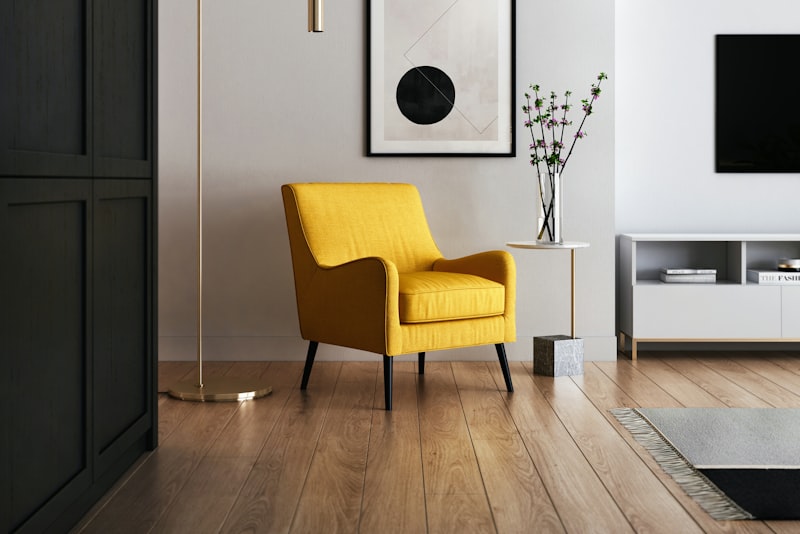
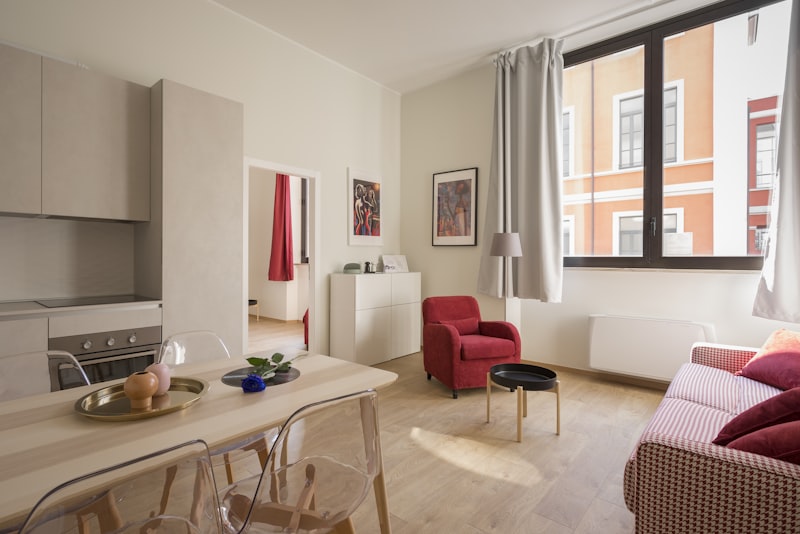
A small living room doesn't have to feel small. I've worked in rooms where the square footage was genuinely tight, and the ones that felt cramped weren't the smallest, they were the most overloaded. Big sofas, furniture jammed against every wall, a coffee table you had to shuffle sideways around. The fix is rarely "get a bigger room." It's choosing the right scale, opening up the floor, and letting light do half the work.
Let me walk through what actually makes a compact living room feel bigger and pull its weight.
Get the scale of your furniture right#
This is the one that matters most, and it's the one people get wrong. A deep, overstuffed sofa might be comfortable, but in a small room it eats the entire space and leaves you nowhere to move. Scale is everything.
Look for pieces with slimmer arms, raised legs, and a smaller footprint. Furniture you can see the floor underneath reads as lighter, because your eye registers the space below it as part of the room. A leggy sofa or a console on tall legs takes up the same floor area as a solid one but feels half as heavy.
You don't need fewer pieces, necessarily, you need correctly sized ones. One properly scaled sofa, a couple of light chairs, and a small table will serve a tight room far better than a sectional that swallows it. When in doubt, measure the piece, tape its outline on the floor, and live with the tape for a day before you buy.
Open up the layout#
A small room feels bigger when the eye can travel across the floor without hitting obstacles. That's the whole trick of layout in a tight space: clear sightlines and clear paths.
Pull furniture a few inches off the walls if you can; counterintuitive, but a little air around pieces reads as breathing room. Keep a clear walking path through the room so you're not weaving around things. Float a smaller piece rather than backing everything onto the perimeter. And resist filling every corner. Negative space, the empty floor and wall, is what tells your brain the room isn't crammed.
In a small room, the empty floor you leave alone does as much work as the furniture you bring in.
If your room is doing double duty as a walkway to another space, plan around that path first and arrange the seating to respect it. Fighting the natural traffic line is how small rooms end up feeling like obstacle courses.
Let in light and keep it uninterrupted#
Light makes space. A bright room feels larger than a dim one of identical size, full stop.
Keep window treatments simple and let them clear the glass when open so you're not blocking daylight. Hang curtains high and wide so the window feels bigger and more light gets in. At night, skip the single harsh overhead and use a couple of lamps to spread a softer, layered glow; even, gentle light makes a room feel more open than one bright point and a lot of shadow.
Color plays in here too. Lighter walls bounce light around and recede, which makes a small room feel airier. That doesn't mean everything must be white. A soft, light tone on the walls with deeper accents in textiles gives you depth without closing the space in.
Use mirrors to double the room#
Mirrors are the oldest trick for small spaces because they genuinely work. A large mirror reflects light and view back into the room, and your eye reads that reflection as more space.
Placement is the whole game. Hang a mirror where it bounces a window or a lamp, and you effectively get a second source of light. Position it to reflect the nicest part of the room rather than a doorway or a cluttered corner. One generous mirror beats a scatter of small ones; the big single reflection reads as depth, while a handful of little frames just reads as more stuff on the wall. Leaning a tall mirror against the wall is an easy, no-drilling way to test the effect before you commit.
In a small room, every piece of furniture is competing for floor space, so the ones that do more than one job are worth their weight. This is where you make a small room work harder rather than just look bigger.
A few that genuinely pull double duty:
- A storage ottoman that's a footrest, a seat for guests, and a place to hide blankets.
- A coffee table with a shelf or drawers, or nesting tables you can spread out when people come over and tuck away after.
- A slim console behind the sofa that holds lamps, books, and a charging spot without taking floor space.
- Seating that tucks fully under a table or against a wall when it's not in use.
Round tables deserve a special mention. In a tight space, a round coffee or side table removes the sharp corners you'd otherwise bruise your shins on and lets people flow around it more easily. Small change, real difference in a room where you're often squeezing past furniture.
The trade-off with multi-use pieces is that they ask you to keep them tidy; a storage ottoman only helps if you actually put things in it instead of piling them on top. But used honestly, one well-chosen piece can replace two single-purpose ones and give you back the floor.
Pulling it together#
A small living room rewards restraint more than ambition. Get the scale of your furniture right first, because nothing else fixes a room that's stuffed with oversized pieces. Then open up the layout, protect the light, add a mirror to borrow some depth, and choose a few pieces that do more than one job.
Notice that almost none of this is about buying more. Most of it is about choosing better and leaving room to breathe. The smallest rooms I've worked in felt generous not because we crammed them with clever solutions, but because we were willing to leave some space empty and let the room feel calm. Start with what's oversized or in the way, fix that, and you'll be surprised how much bigger the same four walls can feel.