
Water droplets dancing on leaves, insects walking effortlessly on ponds, and liquids climbing upward against gravity—these everyday marvels stem from capillary forces and surface tension.

🌊 The Invisible Forces Shaping Our World
Surface tension and capillary action represent two of nature’s most fascinating yet overlooked phenomena. These molecular-level forces govern countless processes that we witness daily, from the simple act of drying our hands with a paper towel to the complex mechanisms that sustain life in plants and animals. Understanding these forces reveals a hidden dimension of physics that operates at the intersection of the visible and invisible worlds.
At their core, both phenomena arise from the cohesive forces between liquid molecules and the adhesive forces between liquids and solids. When water molecules interact with each other, they form hydrogen bonds—weak but collectively powerful attractions that create a “skin” on the liquid’s surface. This molecular arrangement gives rise to surface tension, while the interplay between cohesion and adhesion produces capillary action.
Understanding Surface Tension: Nature’s Invisible Membrane
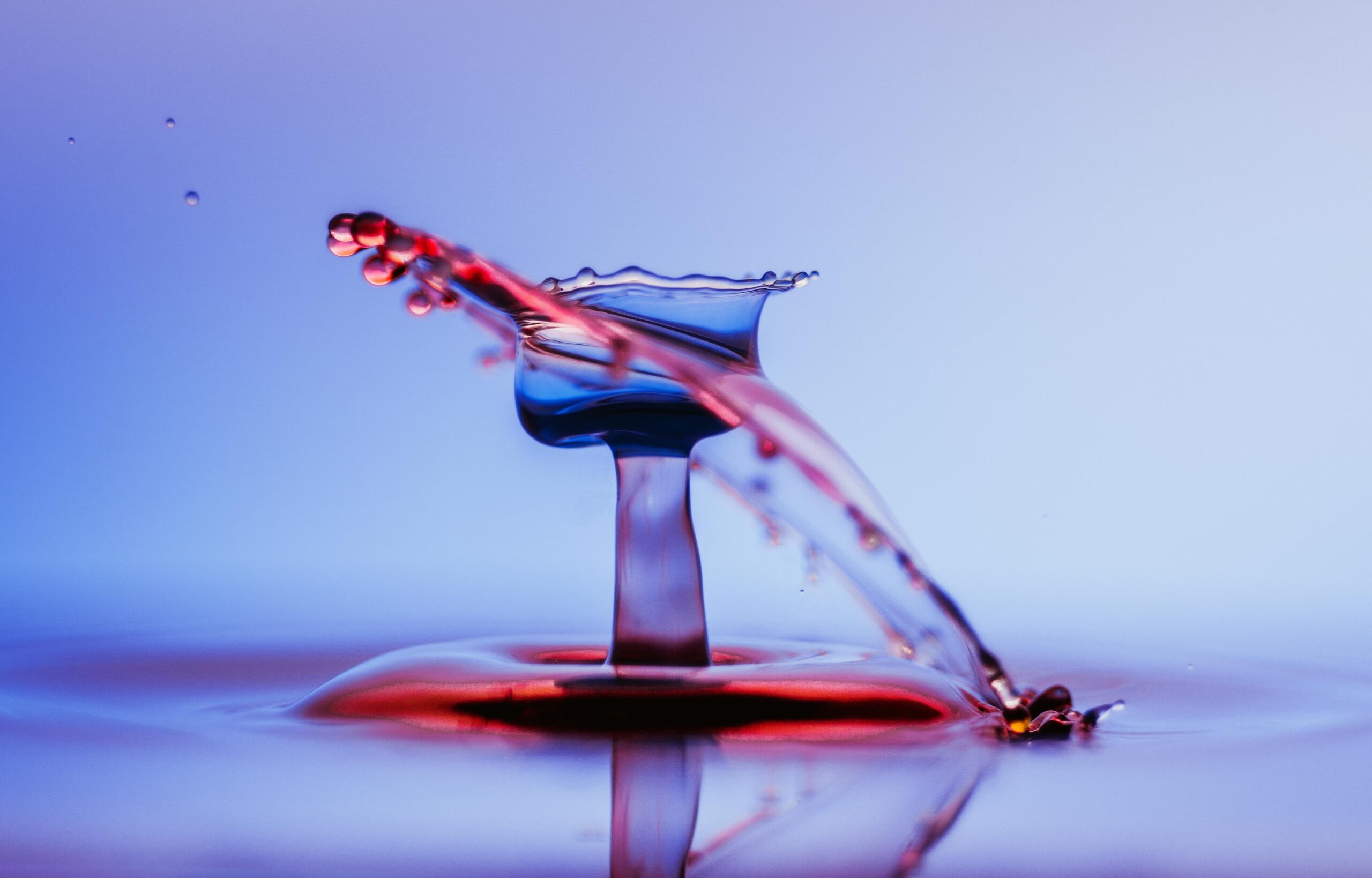
Surface tension can be visualized as an elastic membrane stretched across a liquid’s surface. This phenomenon occurs because molecules at the surface experience an imbalance of forces. While molecules in the bulk of the liquid are pulled equally in all directions by their neighbors, surface molecules only feel attraction from below and sideways, creating a net inward pull.
This inward force minimizes the surface area, explaining why water droplets form spheres—the geometric shape with the smallest surface area for a given volume. The magnitude of surface tension depends on the liquid’s molecular composition. Water exhibits particularly high surface tension due to its polar nature and extensive hydrogen bonding network, measuring approximately 72 millinewtons per meter at room temperature.
💧 Real-World Manifestations of Surface Tension
Surface tension enables water striders and other insects to walk on water without sinking. These creatures distribute their weight across specialized hydrophobic leg hairs that create dimples in the water’s surface without breaking through. The surface tension provides sufficient upward force to counterbalance their weight, creating a remarkable display of physics in action.
Similarly, when you carefully place a steel needle horizontally on water, it can float despite being denser than water. The needle doesn’t actually float but rests on the deformed surface, supported by vertical components of surface tension forces acting along the contact line. This demonstrates how surface tension can temporarily overcome density differences.
Capillary Action: Defying Gravity Through Molecular Attraction
Capillary action describes the ability of liquids to flow through narrow spaces without external forces like gravity or pumps. This phenomenon occurs when adhesive forces between the liquid and the solid surface exceed the cohesive forces within the liquid itself. The result is a spontaneous upward or downward movement that seems to defy basic physics.
In a narrow tube, water molecules adhere to the tube’s walls, creating a curved meniscus. The cohesive forces between water molecules pull adjacent molecules upward, establishing a continuous column. The narrower the tube, the higher the liquid rises, as the ratio of surface area to volume increases, amplifying the effect of adhesive forces relative to gravity.
The Mathematical Beauty Behind Capillary Rise
The height that a liquid reaches in a capillary tube can be predicted using the Jurin’s law, which relates the rise height to surface tension, contact angle, liquid density, and tube radius. This mathematical relationship demonstrates that capillary rise is inversely proportional to tube diameter—halving the diameter doubles the rise height.
The contact angle—the angle formed where the liquid meets the solid surface—reveals whether adhesive or cohesive forces dominate. Water in glass exhibits a contact angle less than 90 degrees, indicating strong adhesion and resulting in an upward-curving meniscus. Mercury in glass shows a contact angle greater than 90 degrees, producing a downward-curving meniscus because cohesive forces prevail.
🌱 Botanical Engineering: How Plants Exploit Capillary Forces
Perhaps the most critical application of capillary action occurs in plant physiology. Trees transport water from roots to leaves through a vascular system called xylem, using capillary forces as a fundamental mechanism. While transpiration pull provides the primary driving force, capillary action within the narrow xylem vessels contributes significantly to water ascent.
The xylem vessels in plants range from 20 to 500 micrometers in diameter—dimensions perfectly suited for substantial capillary rise. Combined with the cohesion-tension theory, where water molecules form continuous columns held together by hydrogen bonds, plants can lift water over 100 meters high in the tallest trees.
This biological application demonstrates engineering principles that predated human understanding by millions of years. The optimization of vessel diameter, wall composition, and network architecture represents a masterclass in fluid dynamics that continues to inspire biomimetic designs in modern engineering.
Medical Applications: From Diagnostics to Treatment
The medical field extensively leverages capillary forces and surface tension in diagnostic devices and therapeutic applications. Blood glucose meters utilize capillary action to draw precise blood volumes into testing strips without requiring manual pumping. The narrow channel within the test strip spontaneously fills with blood upon contact, ensuring consistent sample volumes for accurate readings.
💉 Microfluidics and Lab-on-a-Chip Technology
Microfluidic devices represent cutting-edge applications of capillary phenomena. These “lab-on-a-chip” systems manipulate tiny fluid volumes through microscale channels, performing complex analyses using minimal sample quantities. Capillary forces provide the motive power, eliminating the need for external pumps and enabling portable diagnostic devices.
COVID-19 rapid antigen tests exemplify this technology. The test strip contains a series of connected porous materials that use capillary action to transport the sample through reaction zones, mixing it with reagents and ultimately displaying results in the detection window. This simple yet sophisticated design enables widespread testing without specialized equipment.
Wound Healing and Surgical Applications
Modern wound dressings exploit capillary action to manage exudate (wound fluid). Advanced dressings contain multiple layers with precisely engineered pore sizes that draw excess fluid away from the wound bed through capillary forces while maintaining optimal moisture levels for healing. This passive fluid management reduces infection risk and promotes faster recovery.
In surgery, capillary action assists with hemostasis through materials like cellulose-based products that rapidly absorb blood and promote clotting. The capillary channels within these materials concentrate clotting factors and platelets, accelerating the natural coagulation cascade.
🏠 Everyday Household Phenomena Explained
Your daily routine involves countless interactions with surface tension and capillary forces, though most occur beneath conscious awareness. Understanding these phenomena transforms mundane observations into opportunities for appreciation of physical principles.
Cleaning and Detergency
Soap and detergents work primarily by reducing water’s surface tension. Pure water has such high surface tension that it beads up on many surfaces rather than spreading and penetrating. Surfactant molecules in cleaning products disrupt hydrogen bonding between water molecules, dramatically lowering surface tension and allowing water to wet surfaces more effectively.
This reduction in surface tension also enhances capillary penetration into fabric fibers during laundry. The cleaning solution more easily enters the microscopic spaces within textiles, dislodging dirt particles trapped by capillary forces. The same principle applies when washing dishes, where detergent enables water to reach into crevices and grooves.
Paper Towels and Absorbent Materials
The remarkable absorbency of paper towels stems directly from capillary action. These products contain networks of cellulose fibers that create millions of microscopic channels. When paper towel contacts liquid, capillary forces rapidly draw the liquid into these channels, distributing it throughout the material’s volume.
Manufacturers optimize fiber arrangement, paper thickness, and chemical treatments to enhance capillary performance. The characteristic embossed patterns on paper towels serve multiple functions: increasing surface area for initial contact, creating channels for lateral liquid distribution, and providing mechanical strength when saturated.
Industrial and Technological Applications
Modern industries harness capillary forces and surface tension across diverse applications, from manufacturing processes to energy production. These phenomena enable technologies ranging from ancient crafts to cutting-edge innovations.
🖨️ Printing Technologies
Inkjet printing relies fundamentally on precise control of surface tension. Print heads contain microscopic nozzles that eject tiny droplets onto paper. Surface tension determines droplet size, shape, and trajectory. Ink formulations carefully balance surface tension, viscosity, and evaporation rate to produce sharp, consistent prints.
The paper itself utilizes capillary action to absorb and fix ink. High-quality printing papers contain controlled pore structures that rapidly draw ink into the surface layer while preventing excessive spreading (bleeding) or penetration (show-through). This delicate balance requires sophisticated understanding of capillary phenomena.
Construction and Building Materials
Capillary action presents both opportunities and challenges in construction. Rising damp—moisture ascending through porous building materials—causes structural damage and aesthetic problems. Builders combat this through damp-proof courses: impermeable barriers that interrupt capillary pathways, preventing ground moisture from rising into walls.
Conversely, self-healing concrete exploits capillary action beneficially. This innovative material contains dormant bacteria within microcapsules. When cracks form and allow water to enter, capillary forces draw water to the bacteria, activating them. The bacteria produce calcium carbonate that fills the cracks, extending structural lifespan.
⚡ Energy and Environmental Applications
Addressing global energy and environmental challenges increasingly involves technologies that leverage capillary phenomena. These applications range from power generation to water purification.
Heat Pipes and Thermal Management
Heat pipes use capillary action to transfer thermal energy with remarkable efficiency. These sealed tubes contain working fluid and a porous wick structure lining the inner wall. Heat at one end vaporizes the fluid, which travels to the cooler end where it condenses. Capillary forces then draw the condensed liquid back through the wick to the hot end, completing the cycle without requiring pumps.
This passive heat transfer mechanism appears in applications from laptop cooling to spacecraft thermal control. The absence of moving parts ensures reliability, while the phase-change process enables heat transfer rates far exceeding solid conduction.
Water Harvesting and Purification
Biomimetic water harvesting technologies inspired by desert beetles and cacti utilize engineered surfaces with controlled wettability patterns. These surfaces combine hydrophobic and hydrophilic regions, directing water droplet formation and movement through capillary forces. Such systems enable fog collection in arid regions, providing sustainable water sources.
Membrane filtration technologies for water purification also depend on capillary phenomena. Reverse osmosis and ultrafiltration membranes contain precisely sized pores that permit water passage while blocking contaminants. Optimizing pore size and surface chemistry requires detailed understanding of how capillary forces interact with different substances.
🔬 Scientific Research and Future Directions
Contemporary research continues unveiling new aspects of capillary forces and surface tension, with implications spanning nanotechnology, materials science, and biotechnology.
Nanofluidics and Molecular Manipulation
At nanometer scales, surface forces dominate over bulk properties, making capillary phenomena even more significant. Researchers developing nanofluidic devices must account for surface interactions that negligibly affect macroscopic systems. These devices promise revolutionary applications in drug delivery, DNA sequencing, and chemical synthesis.
Scientists now create surfaces with precisely controlled wettability, producing superhydrophobic materials that exhibit water contact angles exceeding 150 degrees. These surfaces, inspired by lotus leaves, enable self-cleaning windows, anti-icing coatings, and drag-reducing ship hulls. Conversely, superhydrophilic surfaces with near-zero contact angles find applications in anti-fogging treatments and enhanced boiling surfaces.
Space Applications and Microgravity Environments
In microgravity, surface tension becomes the dominant force governing liquid behavior, as gravitational effects essentially vanish. Understanding capillary phenomena proves critical for spacecraft life support systems, fuel management, and scientific experiments. Engineers design specialized containers that use surface tension to position liquids predictably, ensuring reliable fluid handling regardless of spacecraft orientation.
The International Space Station employs capillary-driven water recycling systems, and future long-duration missions will depend increasingly on technologies that leverage surface forces. Research in this area also yields insights applicable to terrestrial systems, particularly microfluidic devices where surface forces similarly dominate.
🎨 Artistic and Recreational Dimensions
Beyond practical applications, capillary forces and surface tension enable artistic expressions and recreational activities. Soap bubbles demonstrate surface tension through their iridescent spherical films—minimal surfaces that adopt shapes of least energy. Bubble artists manipulate solution composition to control surface tension, creating enormous stable bubbles and complex geometric forms.
Coffee ring stains exemplify capillary-driven particle deposition. As a coffee droplet dries, evaporation occurs fastest at the edges, generating outward capillary flow that transports suspended particles to the perimeter. Recent research has revealed methods to suppress or exploit this effect, with applications ranging from inkjet printing to diagnostic assays.
Understanding Through Experimentation
Simple experiments reveal these phenomena’s fundamental nature. Float a paperclip on water, add a drop of dish soap, and watch it immediately sink as surface tension collapses. Place celery stalks in colored water and observe capillary rise through visible dye progression. Such demonstrations transform abstract concepts into tangible experiences.
For those interested in exploring these phenomena further, numerous smartphone applications can enhance understanding through visualizations and simulations. Physics education apps often include interactive modules demonstrating surface tension and capillary action principles, allowing users to manipulate variables and observe resulting changes in real-time.
🌍 Global Impact and Sustainability
As humanity confronts pressing challenges including water scarcity, energy efficiency, and sustainable manufacturing, technologies based on capillary phenomena offer promising solutions. These passive, energy-efficient systems align with sustainability goals by minimizing power consumption and maximizing resource utilization.
Developing regions particularly benefit from technologies leveraging these phenomena. Simple capillary-driven water filters, diagnostic devices requiring no electricity, and passive thermal management systems provide essential services without complex infrastructure. This democratization of technology through fundamental physics principles exemplifies how scientific understanding translates into global impact.
The Interconnected Nature of Physical Phenomena
Surface tension and capillary forces never operate in isolation—they interact with gravity, pressure gradients, thermal effects, and chemical processes. This interconnection means that mastering these phenomena requires holistic thinking that considers multiple simultaneous influences.
Temperature significantly affects surface tension, with most liquids exhibiting decreased surface tension as temperature rises. This temperature dependence influences countless processes from industrial coating applications to atmospheric phenomena. Similarly, dissolved substances alter surface tension, which is why salinity affects ocean surface properties and biological systems carefully regulate body fluid composition.
💡 Harnessing Invisible Forces for Visible Results
The journey through capillary forces and surface tension reveals physics operating at scales both microscopic and cosmic, from molecular interactions to phenomena governing fluid behavior in space. These forces shape our world in profound yet often unnoticed ways, enabling life itself while inspiring technological innovations.
Recognizing these phenomena in daily life transforms ordinary observations into windows onto fundamental physics. The next time you watch water climb a paper towel, observe dew drops on spider webs, or notice how raindrops bead on waxed surfaces, you’re witnessing molecular forces orchestrating macroscopic behavior—a reminder that the universe operates according to elegant principles across all scales.
From ancient civilizations using capillary action in oil lamps to contemporary engineers designing next-generation microfluidic devices, humanity has long exploited these forces, often intuitively. Today’s deeper understanding enables conscious optimization and innovation, suggesting that the most exciting applications of capillary phenomena and surface tension may still lie ahead, waiting to be discovered by curious minds asking fundamental questions about the physical world.